Tidepool
An offline-first survey app for volunteers recording life on rocky shores.
- Client
- Acme Coastal Trust
- Role
- Research, interface design and front-end development
- Team
- With a volunteer coordinator and a marine ecologist
- Year
- 2026 · Four months
Overview
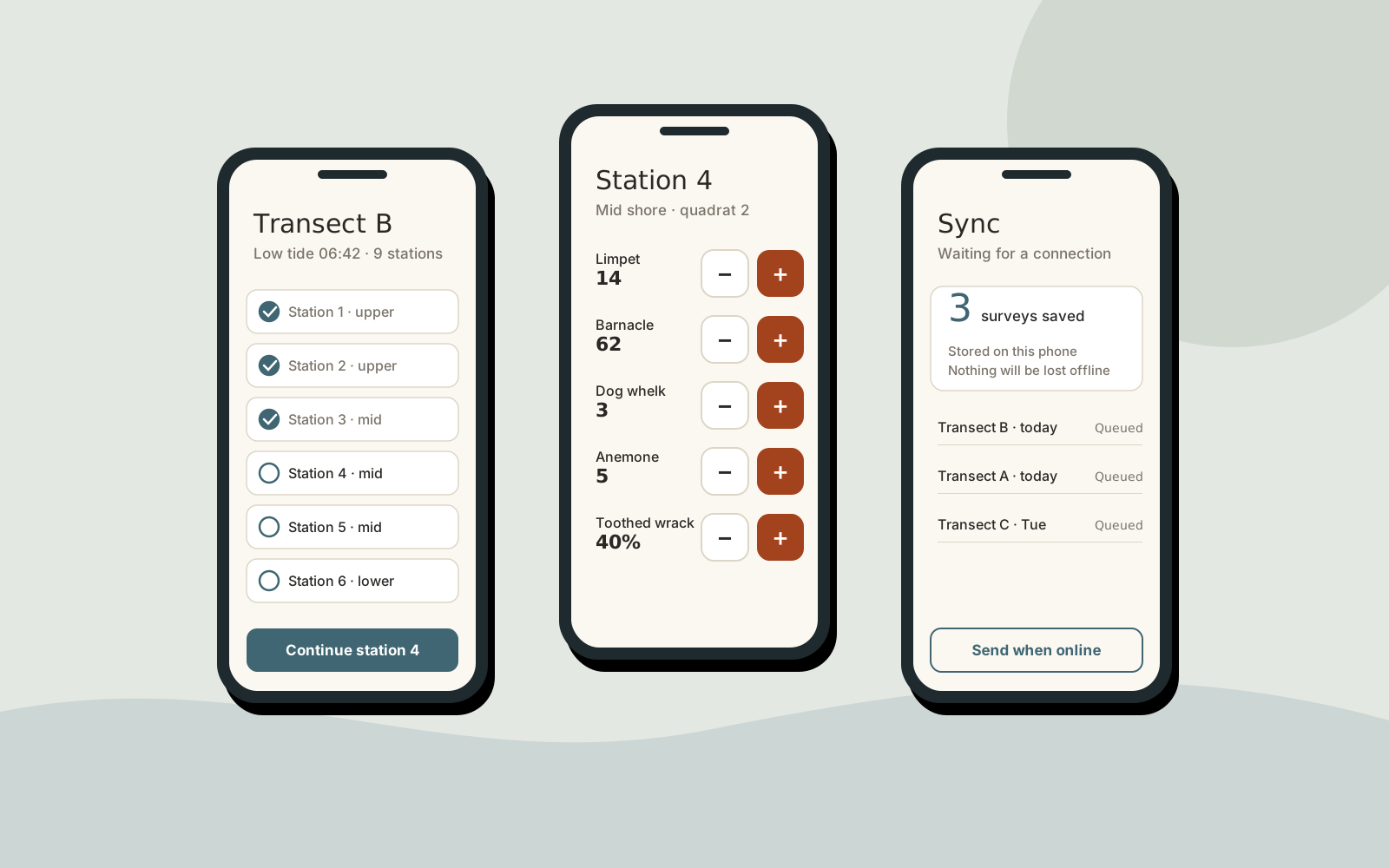
Volunteer surveyors record the species they find along fixed transects at low tide. They had been using printed sheets that were transcribed by hand weeks later. Tidepool replaces the sheets with a phone app that works with wet hands, bright sun and no signal, and syncs when volunteers get home.
The problem
Low tide is a short window. Surveyors kneel on wet rock, often in wind, and need to record quickly before the water returns. Paper worked in those conditions; most apps did not.
Transcription was the real cost. Coordinators spent evenings deciphering smudged sheets, and errors were difficult to trace back to a survey.
Approach
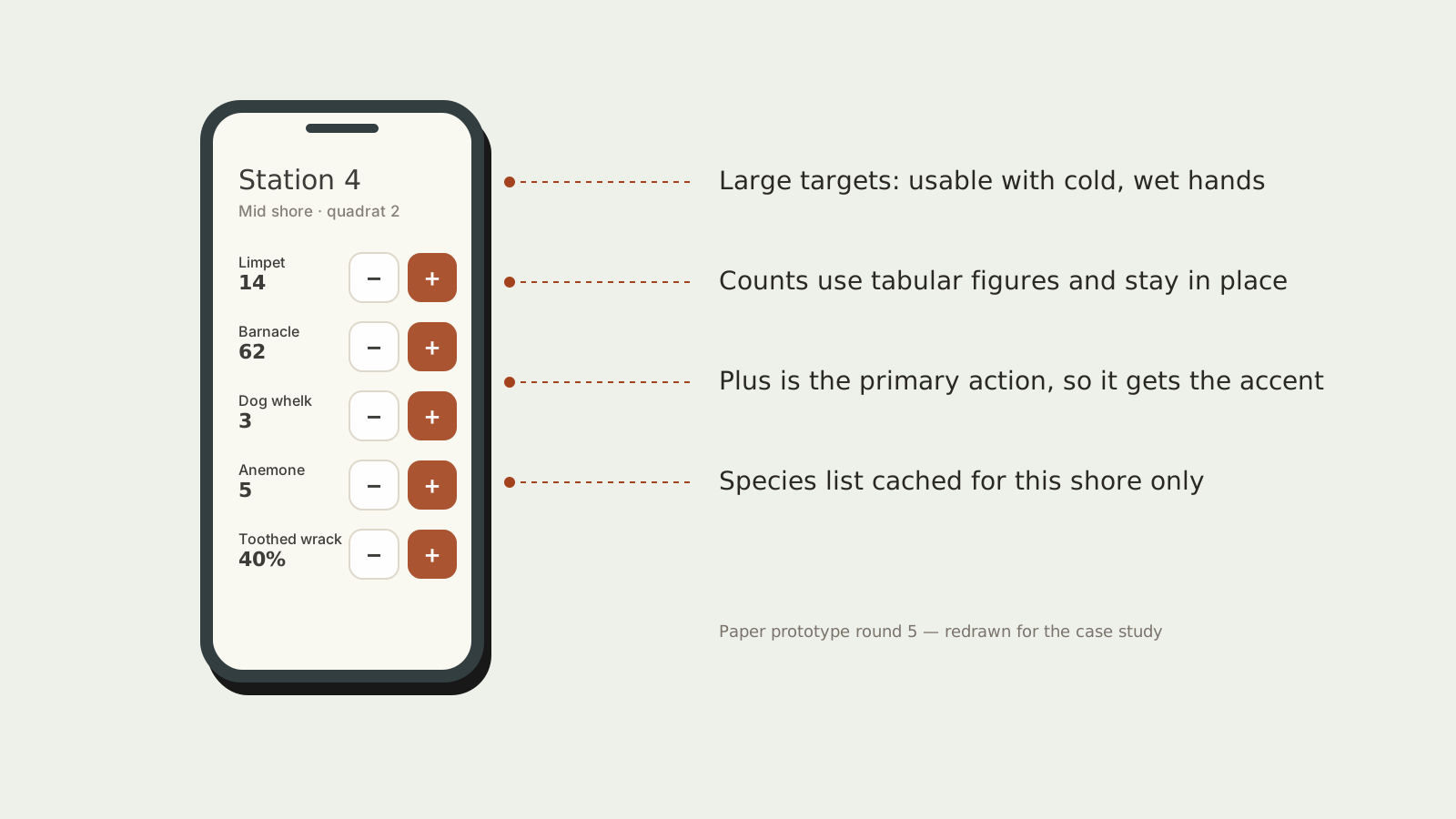
I joined two survey sessions before designing anything. Watching people work changed the brief: the app needed large targets, very little typing and a layout that mirrored the transect order surveyors already knew.
- Built as a progressive web app so volunteers install it from a link, with no app store account.
- All survey data is written to IndexedDB first; syncing is a separate, visible step with a clear queue.
- Counters use large stepper buttons and a high-contrast theme that remains legible in direct sunlight.
- Species lists are cached per site, so the app only shows what is likely to be found on that shore.
Result
The app was trialled across a full survey season alongside paper. Coordinators now review records the same day, and each record links back to the surveyor, site and time it came from.
Paper sheets remain available as a fallback — a deliberate decision, because a dead phone battery should never cost a survey.
What I learned
- Field observation was worth more than any amount of interviewing.
- Making sync explicit built trust: volunteers could see exactly what had and had not been sent.
- Next time I would test the species search with older handsets much earlier.